
Parkinson's Home Care
Call 0203-916-5499
What is Parkinson’s Home Care?
Our Parkinson’s Care at home supports you or your loved one with adapting to a diagnosis and managing symptoms. Our Home Care helps you to stay at home longer, without compromising on independence.
Delivered by professional Care Workers, our Parkinson’s Home Care service is all about you. We personalise your care, focussing on your needs, preferences and lifestyle. Whether you need help for a few hours a day or require longer periods of care, we make life easier.
A diagnosis of Parkinson’s is lifechanging, not just for the person receiving the diagnosis but also for their loved ones. However, a diagnosis doesn’t mean you cannot live well at home. Our Parkinson’s Care at home enables you to maintain as much independence and dignity as possible with the right level of support.
We’re here to help.
Your home, Your care, Your choice.
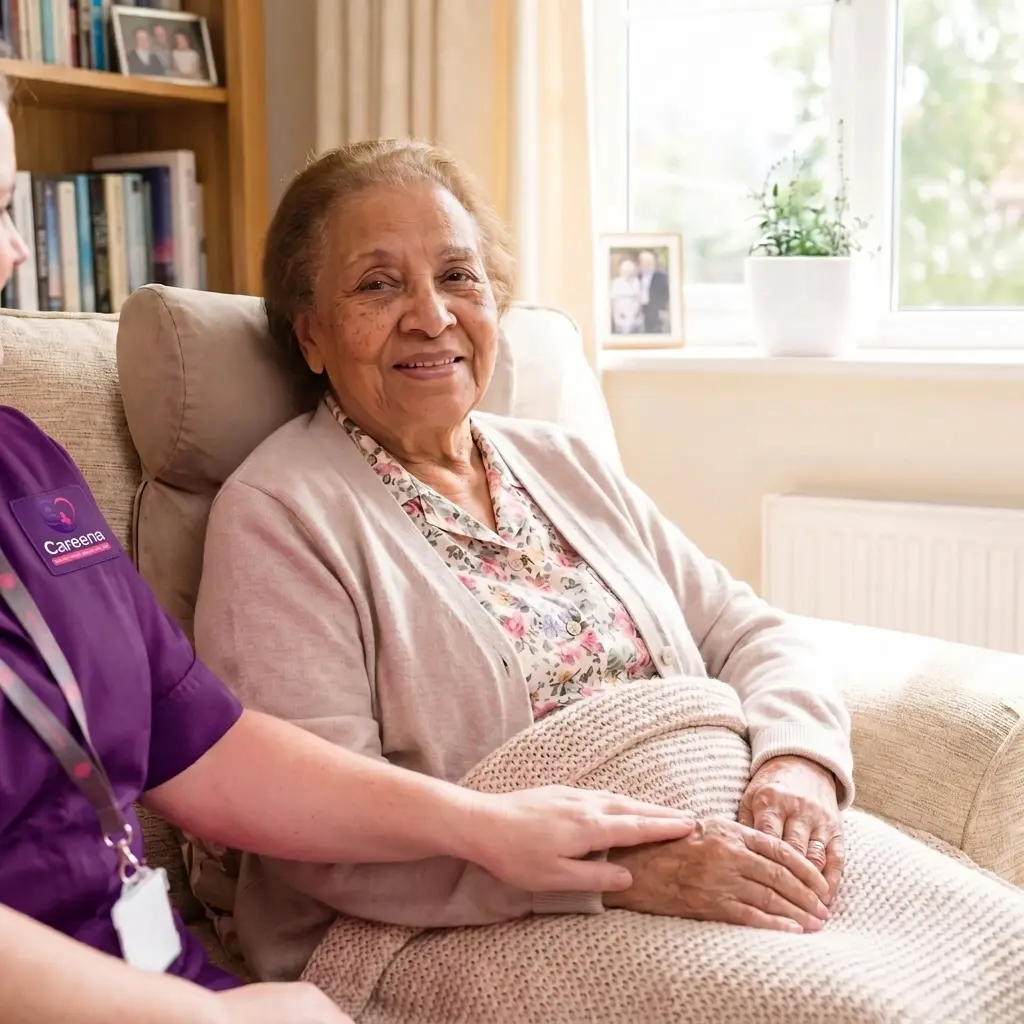
What does Parkinson’s Home Care include?
Receiving compassionate care in the familiarity, safety and comfort of the home can positively impact overall health and wellbeing. This can be especially true when compared to receiving Parkinson’s Care in a care home. In fact, one in six people living in nursing homes say they have no control over their daily lives.1
Our highly trained Care Workers are experienced in providing quality one to one care. With our support, living at home with Parkinson’s is not only possible but a great alternative to other types of care.
We’ll tailor your care and provide the necessary levels of support which meet your needs. We offer regular, short visits or 24 Hour Care at Home. Our fully managed service is holistic so you and your loved ones can always depend on us.
Anyone living with Parkinson’s knows symptoms can vary daily. On a good day, our friendly and remarkable Care Workers can be there to provide companionship over a cup of tea. On a tough day, they will be there to take the pressure from the daily routines so that you can concentrate on yourself – this could be anything from preparing meals to housework or shopping for essential items.
Whatever kind of day you experience, our Care Workers are ready to support you. They also provide emotional support if symptoms take a toll on mental health.
Parkinson’s Live-in Care
Moving into a care home at any stage in life can be challenging and even more so when faced with a life changing diagnosis like Parkinson’s. Many people diagnosed with Parkinson’s consider relocating to a care home. For some, this is the best option. For others, the move can be difficult when it results in reduced independence and control over daily routines.
Parkinson’s Respite Care
If you care for a loved one who has Parkinson’s, finding time for yourself can often feel difficult but it’s essential for your wellbeing. Our Respite Care service enables primary caregivers to take regular breaks with peace of mind. Our professionals can take over from where you left off, ensuring continuity and safety.
Parkinson’s Personal Care
Parkinson’s Personal Care includes anything from preparing meals and doing the laundry to helping with more sensitive needs such as using the bathroom.
Parkinson’s Companion Care
On difficult days, sometimes all you need is a friendly face and a chat. Our Care Workers will happily take you on shopping trips or out and about in your local community. This service could also include looking after your pet and taking dogs for regular walks. Whatever you need, our Companion Care is sensitive and ensures privacy is always respected.
Why choose Careena Homecare?
Understanding
Our Overnight Care Teams have many years’ experience. We understand challenges and we’re ready to help you. Our entire service is designed to be simple and less stressful.
Excellent Training
Our Carers are carefully selected and receive training through our exclusive Careena Homecare Academy. We don’t use an agency or freelance staff to maintain our quality reputation.
Quality Care
Our strict performance guidelines, Care Quality Commission (CQC) ratings and transparency via our care monitoring app. give added peace of mind that quality is assured.
Personalised Care
Our personalised care is unique to each person we support. Overnight Care is flexible when circumstances change and always delivered with compassion, dignity and respect.
How can Parkinson’s Home Care help?
Although there currently isn’t a cure for Parkinson’s, it can be managed with treatments and the help of specialists. Our Care Workers can be a highly valuable addition to yours or your loved one’s care team when help at home is needed.
Symptoms of Parkinson’s can vary from one person to another. Physical symptoms include tremors or shaking that can be uncontrollable, slowness of movement, rigidity or muscle stiffness and fatigue. Other symptoms which cannot be seen, but can be equally as debilitating, include bowel and bladder problems and disturbed sleep. Mental health problems, such as anxiety or depression, are also symptoms of Parkinson’s.
Find your local Careena Homecare Team to discuss which Home Care option is right for you.
What are the advantages of Parkinson’s Care at Home?
Receiving Parkinson’s Care in the safety and familiarity of the home has many advantages, including:
Parkinson’s Home Care reviews
We’re proud to serve our clients across the South of England. Find out how our Overnight Care services have benefited them with these independent reviews on homecare.co.uk:
Cost of Home Care for cancer patients
The cost of our Home Care for cancer patients depends on the amount of care and support needed. This includes the care services required, the frequency of visits and your location. Our expert Team will conduct a comprehensive assessment of you or your or your loved one’s needs at home to determine the type and amount of support needed. There are also differences between the cost of Home Care and the cost of Live-in Care.
When you get in touch, we can arrange a free no-obligation home visit to discuss your needs in more detail.
We’re here to help.
Your home, Your care, Your choice.
EnquireQuick questions
About Parkinson’s Home Care
What is included with Parkinson’s Care at home?
Our highly personalised Parkinson’s Care at home service includes:
Free home visit before care starts. If care is needed quickly, we can offer same day home visits
Customised and flexible care plan developed with you and your support network
Matched with the most suitable Live-in Carers to meet your required needs
Dedicated Team led by an experienced Branch Manager
Professional Care Workers trained by our exclusive Careena Homecare Academy
Help with household tasks such as meal preparation, shopping and laundry if needed
Emotional wellbeing support
Support to continue with social activities
Cognitive stimulation such as talking and reading
How much does Parkinson’s Home Care cost?
The cost of care varies depending on specific care needs and where you live. If you or your loved one requires continuous care, Live-in Care might be the most cost effective option. Our experienced Teams will conduct a comprehensive assessment of your needs to determine the level of support required.
Find your local Careena Homecare Team to discuss our costs in more detail.
How can I fund Home Care for Parkinson’s?
Most of our clients fund their care privately, but you may be eligible for benefits or other financial support. You can have a financial assessment to determine if you’re eligible for help towards the cost of care. Your local authority may fund care at home if you meet certain financial criteria.
If you are aged 64 and under and need help with personal care or have difficulty walking, you may be eligible for Personal Independence Payment (PIP). If you are at State Pension age or above, you may qualify for an Attendance Allowance.5
We have written a guide to funding Home Care to help you understand your options.
How can I arrange Parkinson’s Home Care?
Our friendly and experienced Teams are here to help you or your loved ones with Parkinson’s Care. Find your local Team to discuss how we can help.
What is Parkinson’s?
Parkinson’s is a progressive neurological condition, which is caused by problems in the brain and means symptoms deteriorate over time. People with Parkinson’s have a reduced ability to produce a chemical called dopamine because some nerve cells have stopped working. Dopamine plays a vital role in controlling muscle movement throughout the body. As a result of reduced dopamine production, the brain can’t send proper signals to muscles in the body, which then causes mobility issues.
Parkinson’s is one of the most common nervous system disorders of the elderly. In the UK, one in 50 people over the age of 65 have Parkinson’s and this number is expected to double by 2030.6
A Parkinson’s UK report published in 2018 using primary care data from 2015 found the following:
About 137,000 people were living with Parkinson’s in the UK
Each year, there are about 17,300 new diagnoses of Parkinson’s in people aged 45 and above
The condition is more common in men than women, especially in ages 50-89 years old
The lifetime risk of being diagnosed with Parkinson’s is the equivalent of 1 in every 37 people7
At this time, the exact cause of Parkinson’s remains unknown. Researchers suspect it’s a combination of reasons, including age, genetics and environmental factors that can cause the dopamine producing nerve cells to die.
Sadly, there is currently no cure for Parkinson’s. This means the level of support required by you or your loved one may potentially increase over time. We tailor our Parkinson’s Care plans to each person’s individual needs and constantly review them with you and your loved ones to ensure we continue to meet your requirements as and when they change.